Choosing the right window system is one of the most important decisions when improving comfort, energy performance, and overall usability in your home. Different materials offer different advantages. Understanding how PVC and aluminium systems compare will help you select the most suitable solution for your project.
The choice between PVC and aluminium windows depends on your priorities — including insulation, design, and the overall architectural context of your home.
Inherently high insulation: Uw from approx. 0.64 W/m²K
Advanced thermal breaks required: Uw from approx. 0.7 W/m²K (90mm profiles)
Standard residential use; may degrade with intense UV
Exceptional UV resistance; ideal for coastal environments
72–82mm frame depth; standard residential profiles
Slim 65–90mm profiles; clean architectural lines
Lower initial cost; cost-effective for renovations
Higher initial investment; long-term durability value
Use this comparison to determine which material best suits your project before exploring specific systems. Both PVC and aluminium are widely used in residential applications—the right choice depends on your home, usage needs, and environmental exposure.
PVC window systems are widely used in residential projects where thermal efficiency and acoustic comfort are key priorities. They are designed to support strong thermal insulation, effective noise reduction, and low maintenance over time. PVC is often selected for renovation projects and homes where improving indoor comfort is a primary objective. For system-specific details
Aluminium window systems are typically chosen for their structural strength and clean, architectural appearance. They are designed to support slim profiles with larger glazed areas, high durability in exposed conditions, and flexible design for modern façades. Aluminium is often used in contemporary homes and projects with larger openings. For system-specific details
A escolha e a instalação de cada sistema são feitas de acordo com as condições reais, a Exposição, a estrutura e o uso perlongado.
Window costs in Portugal vary depending on material, system complexity and project requirments. The ranges below reflect certified systems from established European manufacturers (Salamander & Aliplast), including comprehensive warranties. Prices €/m²
€300 – €450
€450 – €600
€600 – €800
Included (Ola Janelas)
€225 – €500
€500 – €1,125
€1,125 – €1,750
Included (Ola Janelas)
We offer PVC and aluminium windows or patio doors in typical residential sizes or custom configurations. Basic options include double glazing and simple installation. Premium or larger configurations may cost more due to size, advanced glazing, or complex installation. Final costs depend on dimensions, glazing, and site conditions. A site visit ensures accurate quotes. .
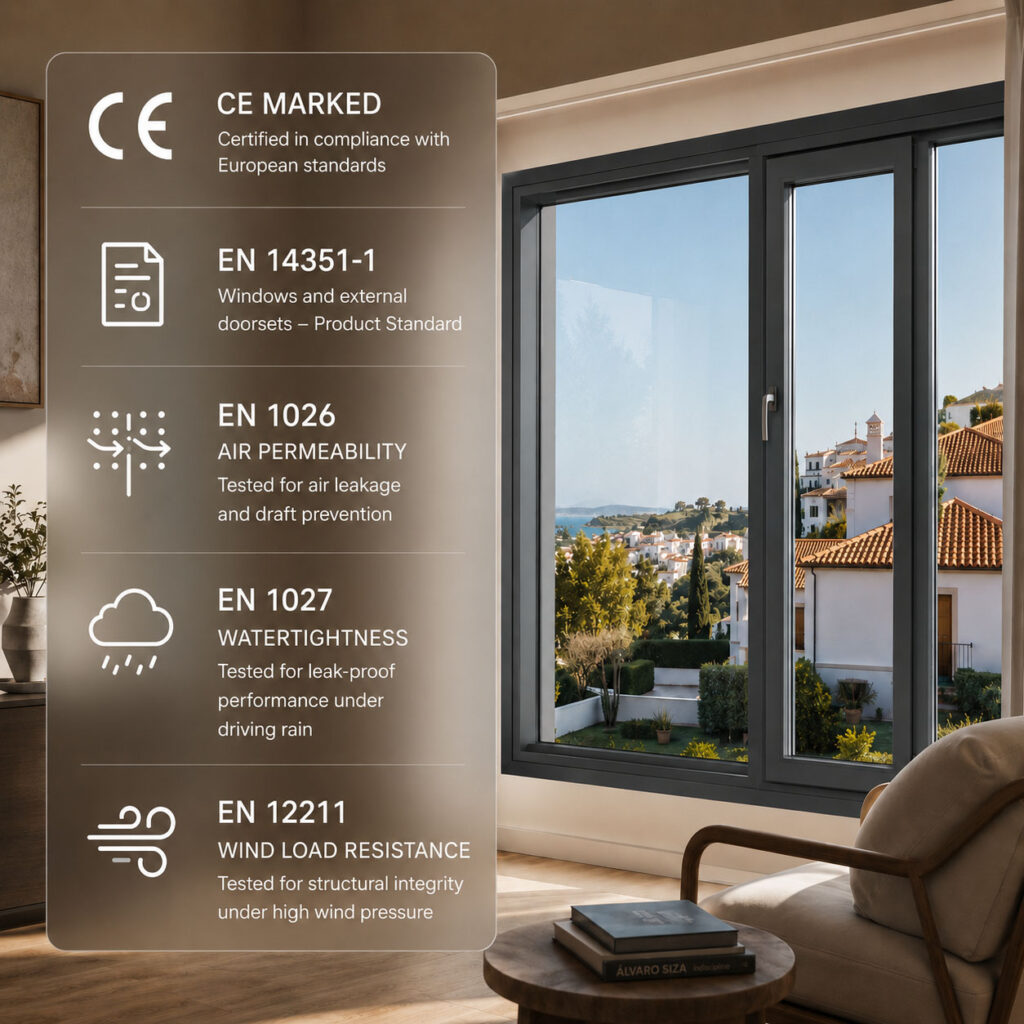
All Ola Janelas systems are CE Marked and tested to EN 14351-1, the European standard for windows and external doorsets. Certified performance includes:
5-year manufacturer warranty
Ola Janelas installation guarantee: 2 years
All systems specified by Ola Janelas are CE Marked and tested to EN 14351-1, the mandatory European product standard. This ensures verified performance in air permeability (EN 1026), watertightness (EN 1027), and resistance to wind load (EN 12211).
These frequently asked questions address common considerations when comparing materials, performance, and installation. For more detailed guidance, you can explore specific system pages across the site.
PVC windows are typically selected for residential projects where thermal efficiency and acoustic comfort are the highest priorities.
Aluminium windows are chosen for their structural strength, allowing for slimmer profiles and larger glazed areas.
While PVC is often preferred for renovations focused on indoor comfort, aluminium is frequently used in modern architecture requiring durability in exposed conditions.
PVC systems are widely used for their ability to support high thermal insulation and reduce heat loss.
High-performance aluminium systems are also designed with deeper profiles and advanced glazing configurations.
Final performance depends on system depth, glazing specification, and installation quality.
PVC window systems are designed for low maintenance and long-term reliability.
Aluminium systems are selected for their durability, particularly in demanding environments such as coastal areas or locations with high sun exposure.
Both materials are specified to maintain consistent performance in residential applications.
Frame depth directly influences glazing capacity, insulation potential, and structural behaviour.
Deeper profiles, such as 82 mm PVC or 90 mm aluminium systems, support higher-performance glazing.
More compact profiles, such as 75 mm aluminium systems, are often used in renovation projects where a reduced frame size is required.

Yes, modern window systems are adapted to maintain the visual character of traditional façades while improving thermal and acoustic performance.
PVC is frequently used in renovation projects to enhance indoor comfort, while aluminium allows greater flexibility where maintaining original proportions and clean architectural lines is essential.
If you’re planning a renovation, you can request a site visit → to assess your project conditions.
Aluminium provides maximum structural strength and resistance to wind exposure, making it well suited for coastal environments and areas subject to strong weather conditions.
PVC systems are also specified for coastal residential applications where the system configuration matches the project requirements.
Yes, aluminium windows are available in 1,000+ range of powder-coated colours and finishes.This allows frames to be matched to both modern and traditional façades, supporting architectural consistency across the project. PVC systems are also available in 31 colours.